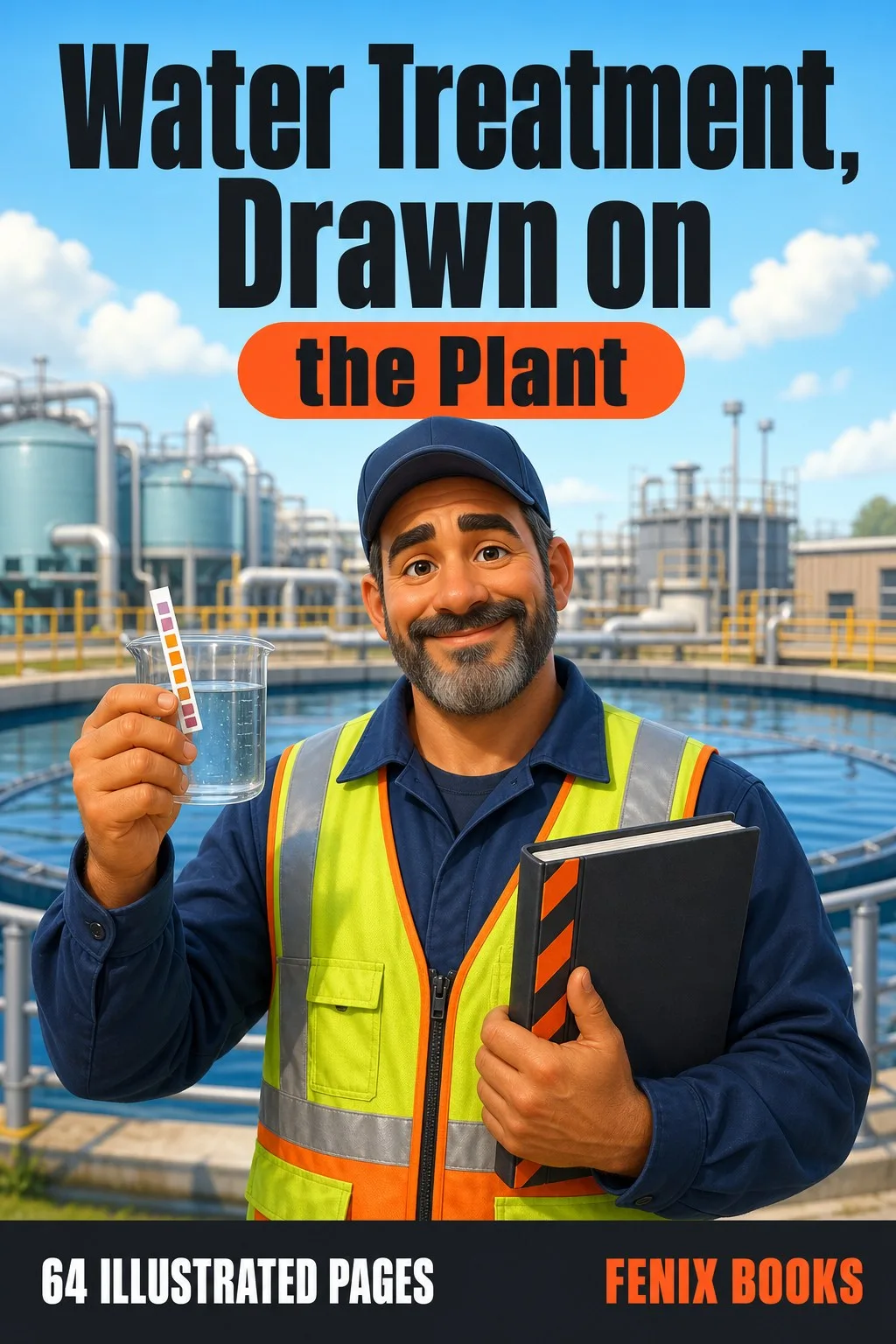
📄 Digital book in PDF: it comes by email. Nothing is shipped on paper.
How to study the whole plant from intake to tap without rereading dense manual chapters or guessing which number goes where in the formula
🔒 Protected checkout · PDF by email · 30-day guarantee
Built to read on your phone at the plant, on a tablet at the kitchen table, or printed and kept by the bench.


Swipe to see more · tap to zoom →
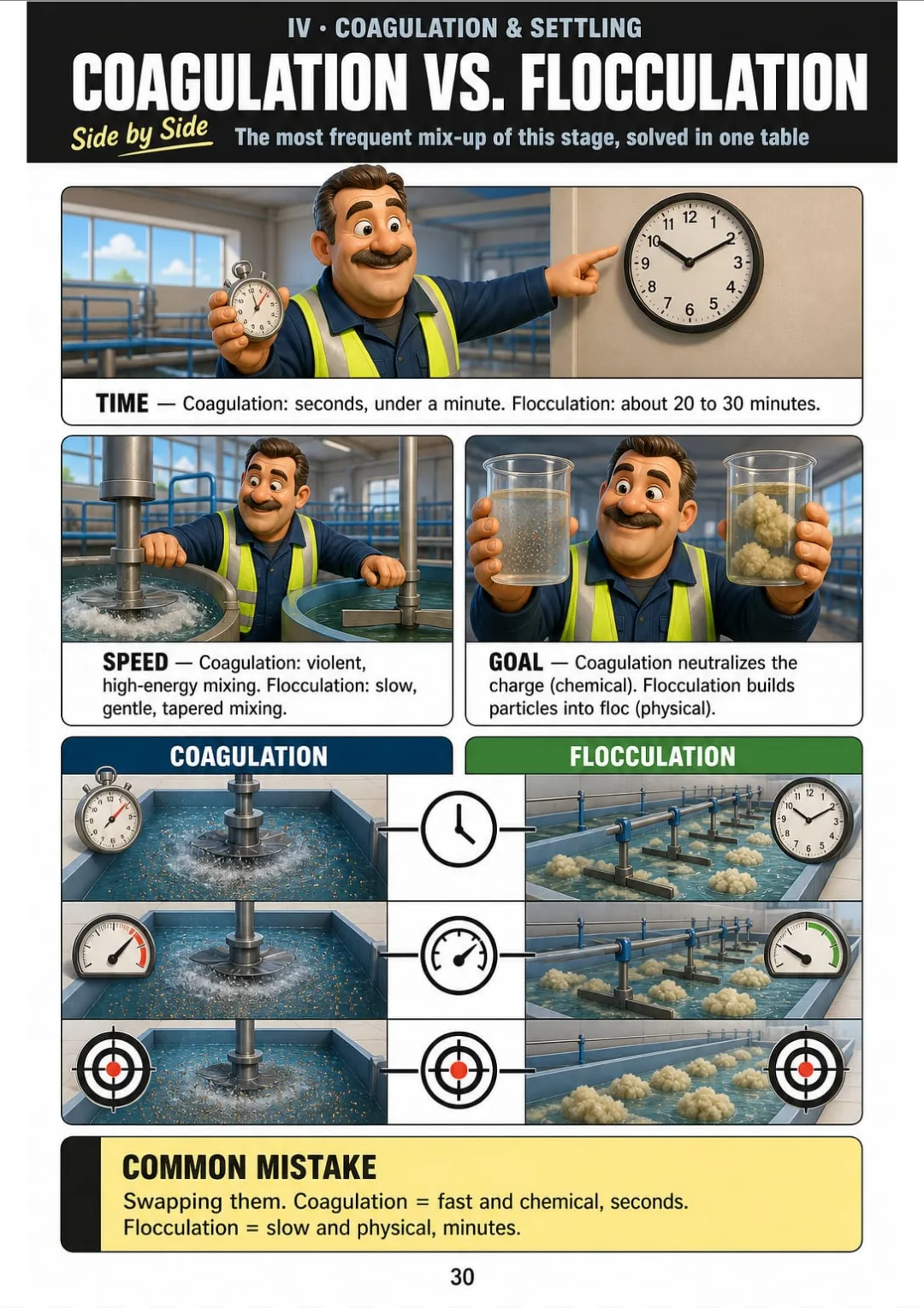
You read the chapter on coagulation. Then the chapter on flocculation. By the next morning they've blended into one thing. Because the manual describes them in paragraphs, not side by side.
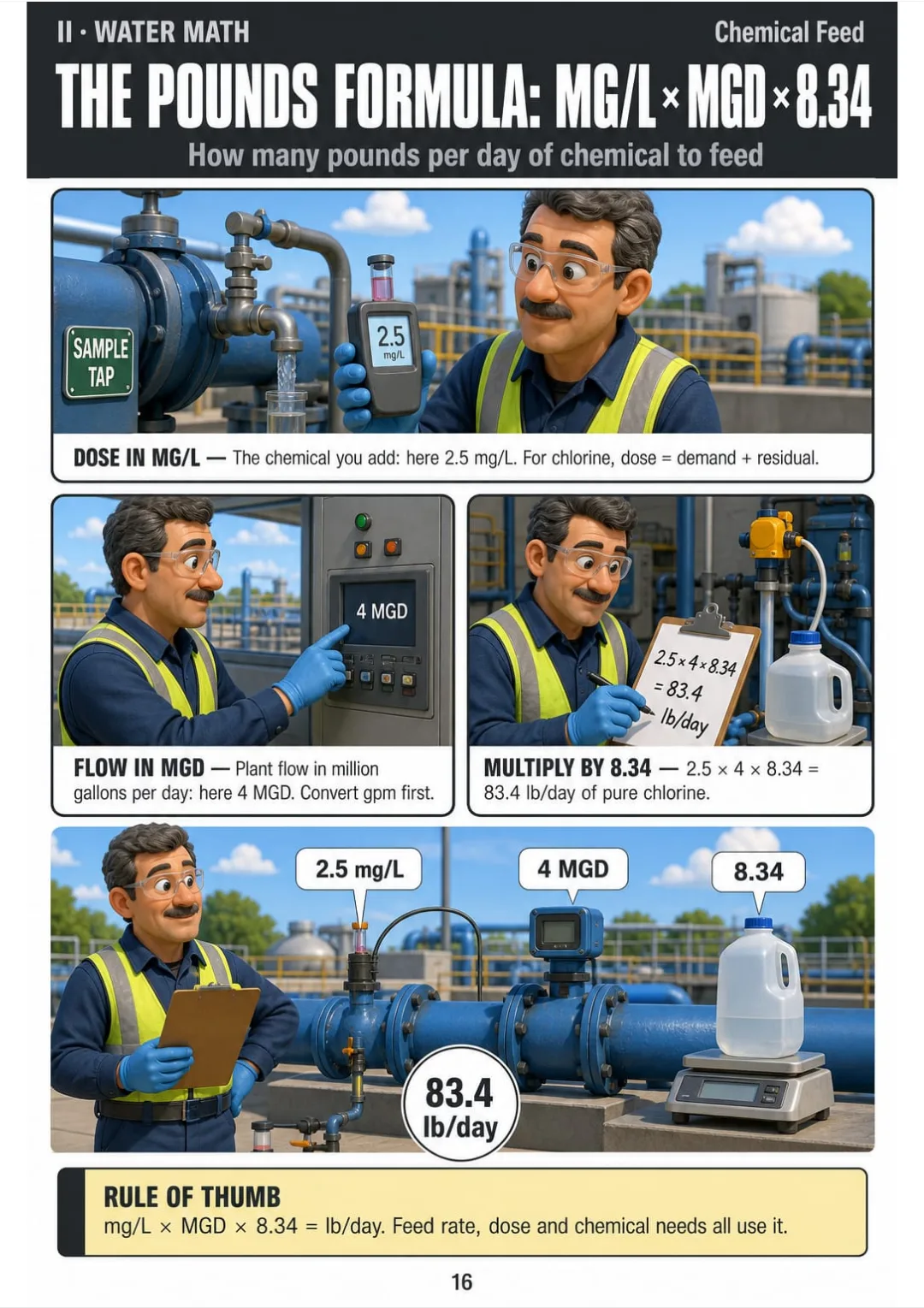
You know the pounds formula. mg/L times MGD times 8.34. But the problem gives you gallons per minute and percent strength, and suddenly you don't know which number goes where.
pH, alkalinity, hardness. Three words, three definitions, three tests. You study them separately and they mix together every single time.

This page puts coagulation and flocculation side by side on the same drawing. Flash mix on the left: seconds, high speed, charge neutralization. Slow mix on the right: twenty to thirty minutes, gentle paddles, floc building up.
Two processes, one page. You see where each one happens in the plant, what it does to the particle, and why the order matters.
When it's drawn where it happens, you stop confusing it.
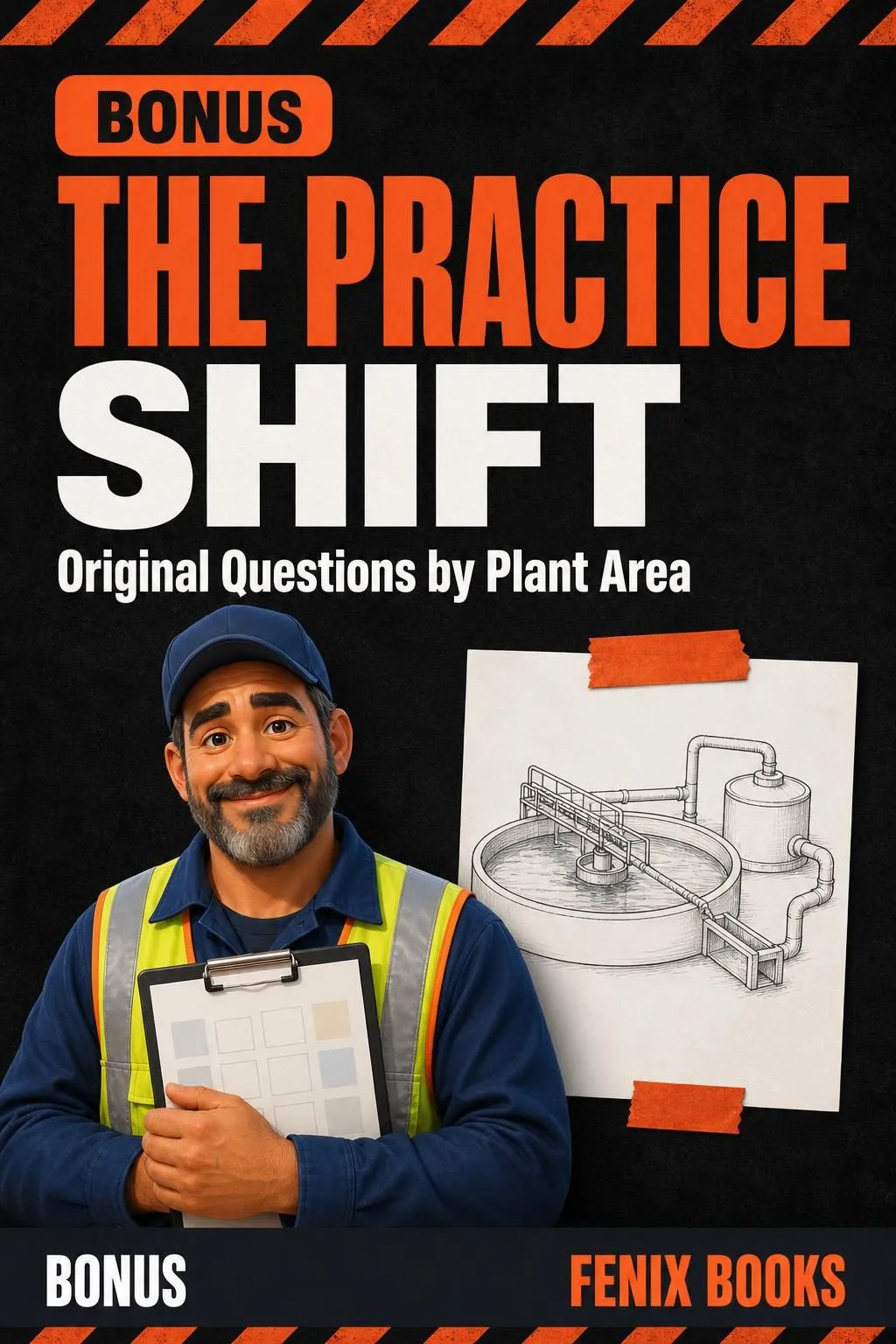
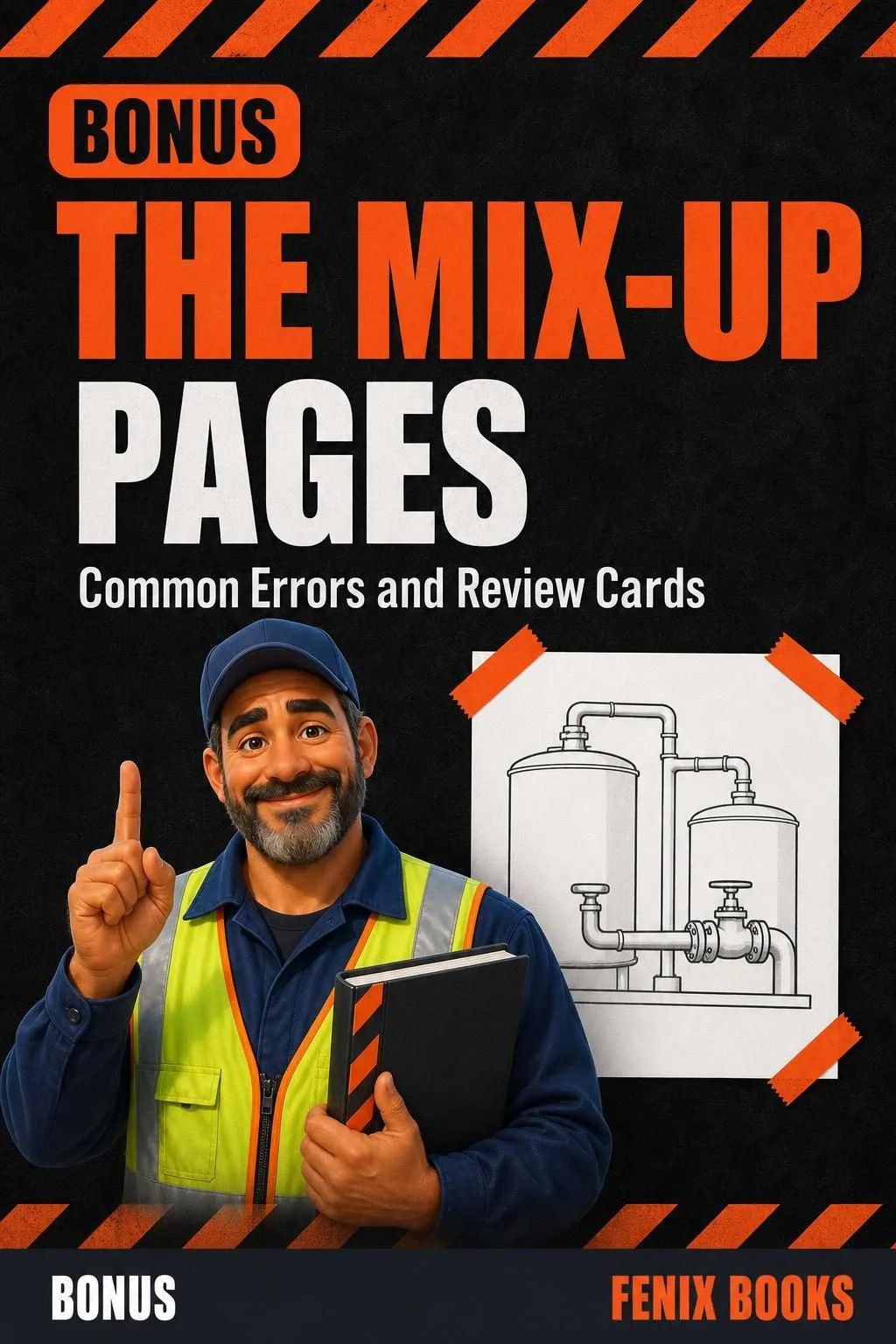
Nine parts follow the water from the source to the tap. Every formula sits next to the basin, filter, or pump it describes.
Every page has one idea, drawn where it happens in the plant. The formula is right there, on the equipment. No flipping back. No hunting for the right chapter.

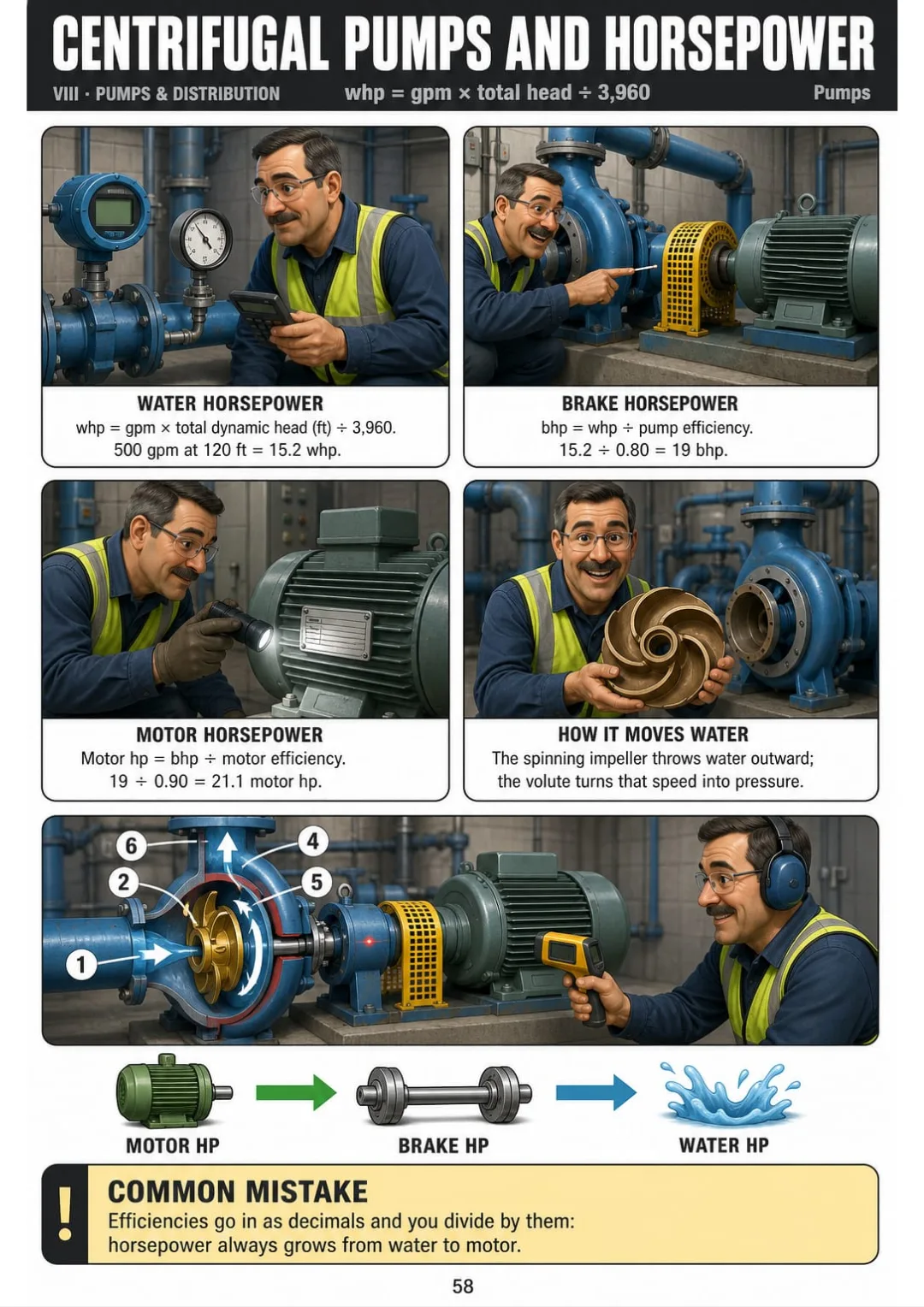
This page shows a centrifugal pump with every part labeled: the impeller, the volute, the suction and discharge. The horsepower formula sits on the pump itself: 500 gpm × 120 feet of head ÷ 3,960 = about 15 water horsepower. You see each number and where it comes from.
Below the drawing, the problem is worked out step by step: pick the formula, label each number, convert the units, solve. Every math page follows that routine.
Find the pump, and the formula is already on it.
The plant from intake to tap: how the whole system works, what an operator does, and how exam grades vary by state.
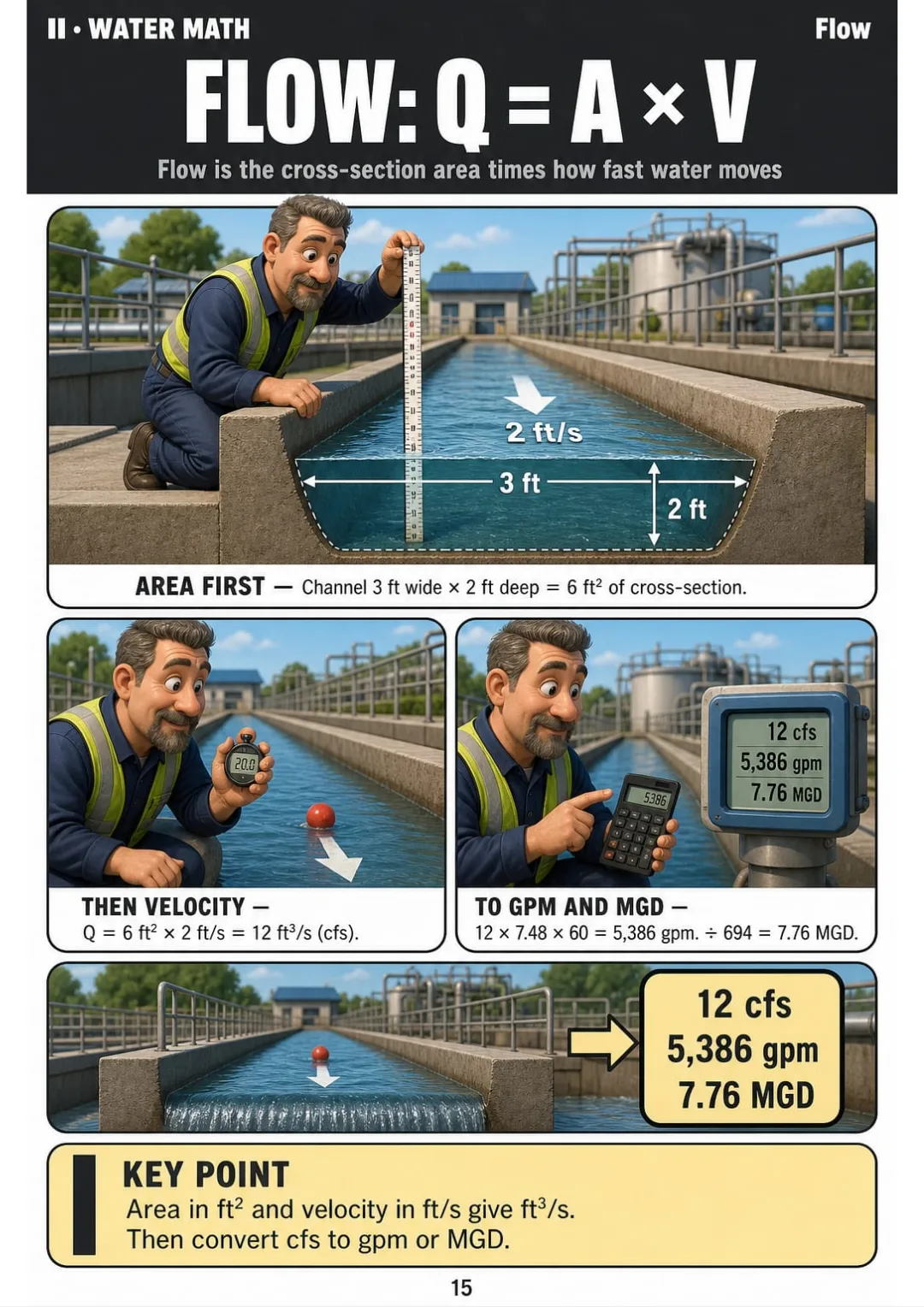
Water math with a 4-step routine: area, volume, flow, pounds, detention time, pressure and head.
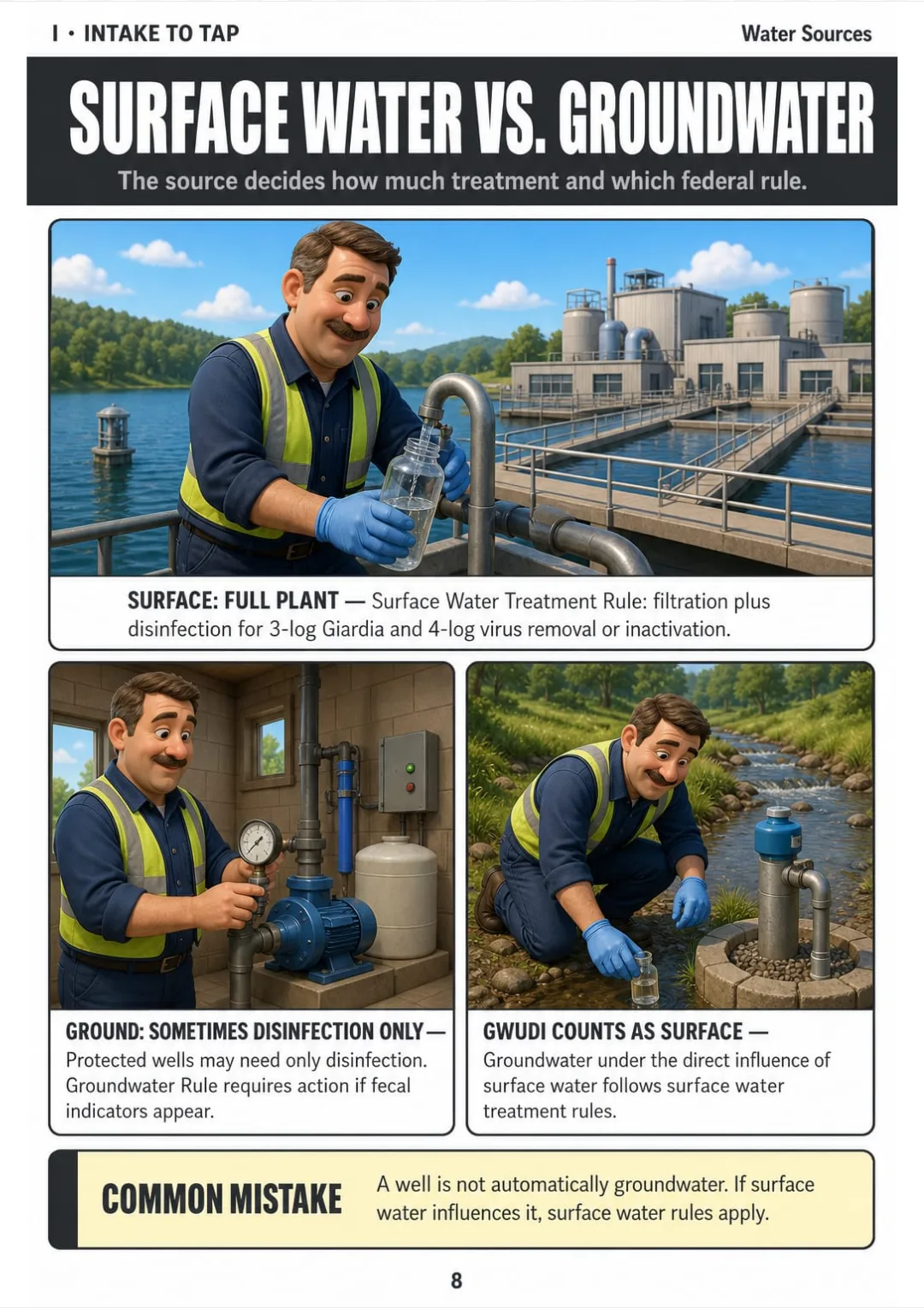
Source water and pretreatment: watersheds, wells, intakes, screens, algae, iron and manganese.
Coagulation, flocculation and settling: flash mix, slow mix, jar testing and sedimentation, drawn side by side.
Filtration: rapid sand filters, loading rate, head loss, backwash sequence, turbidity and common filter problems.
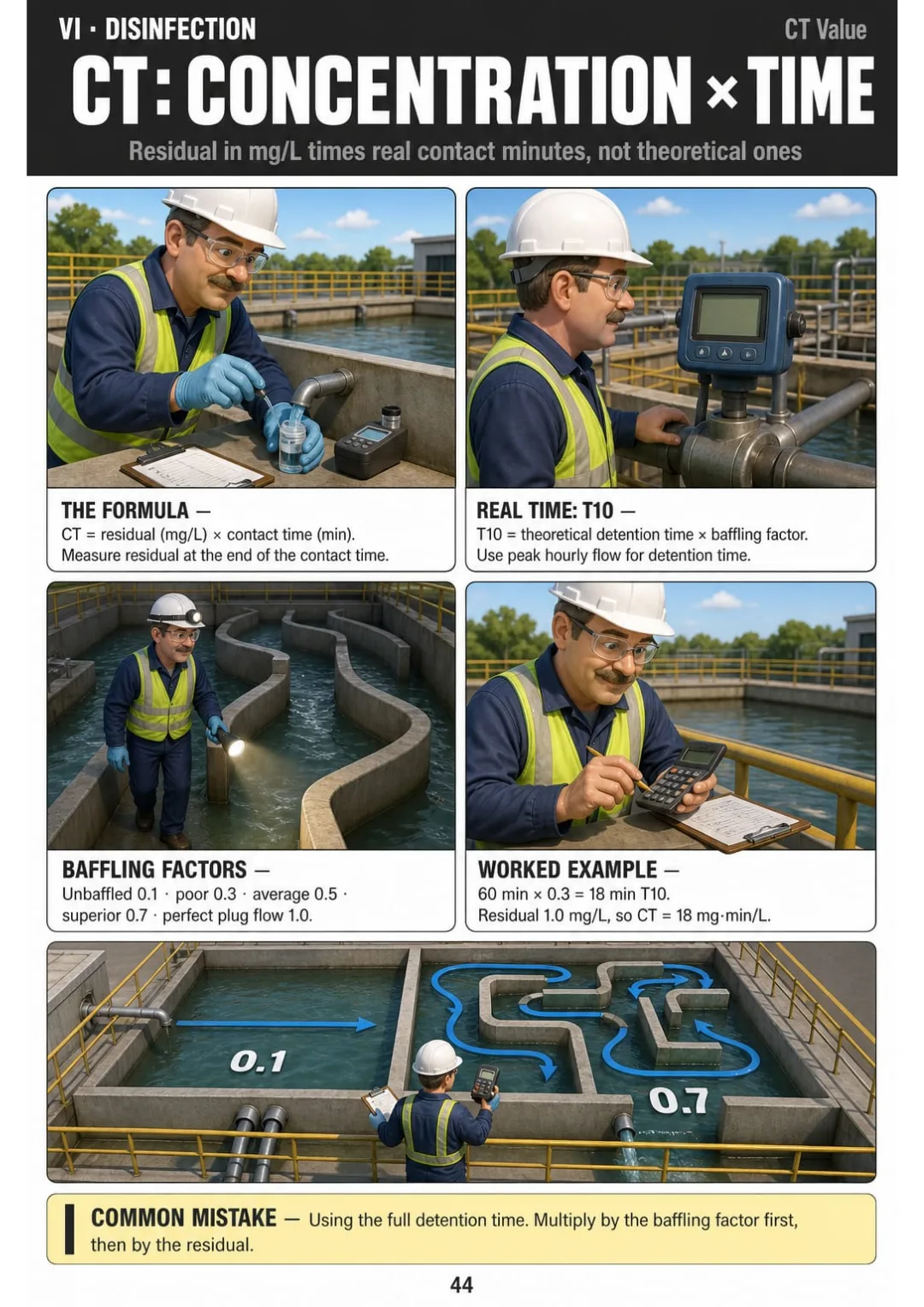
Disinfection: dose, demand, residual, breakpoint, CT, gas chlorine vs. hypochlorite, and safety.
pH, alkalinity, hardness and corrosion: the three concepts side by side, softening, corrosion control and fluoridation.
Pumps, distribution, safety and lab: storage tanks, mains, cross-connections, centrifugal pumps, lockout/tagout and sampling.
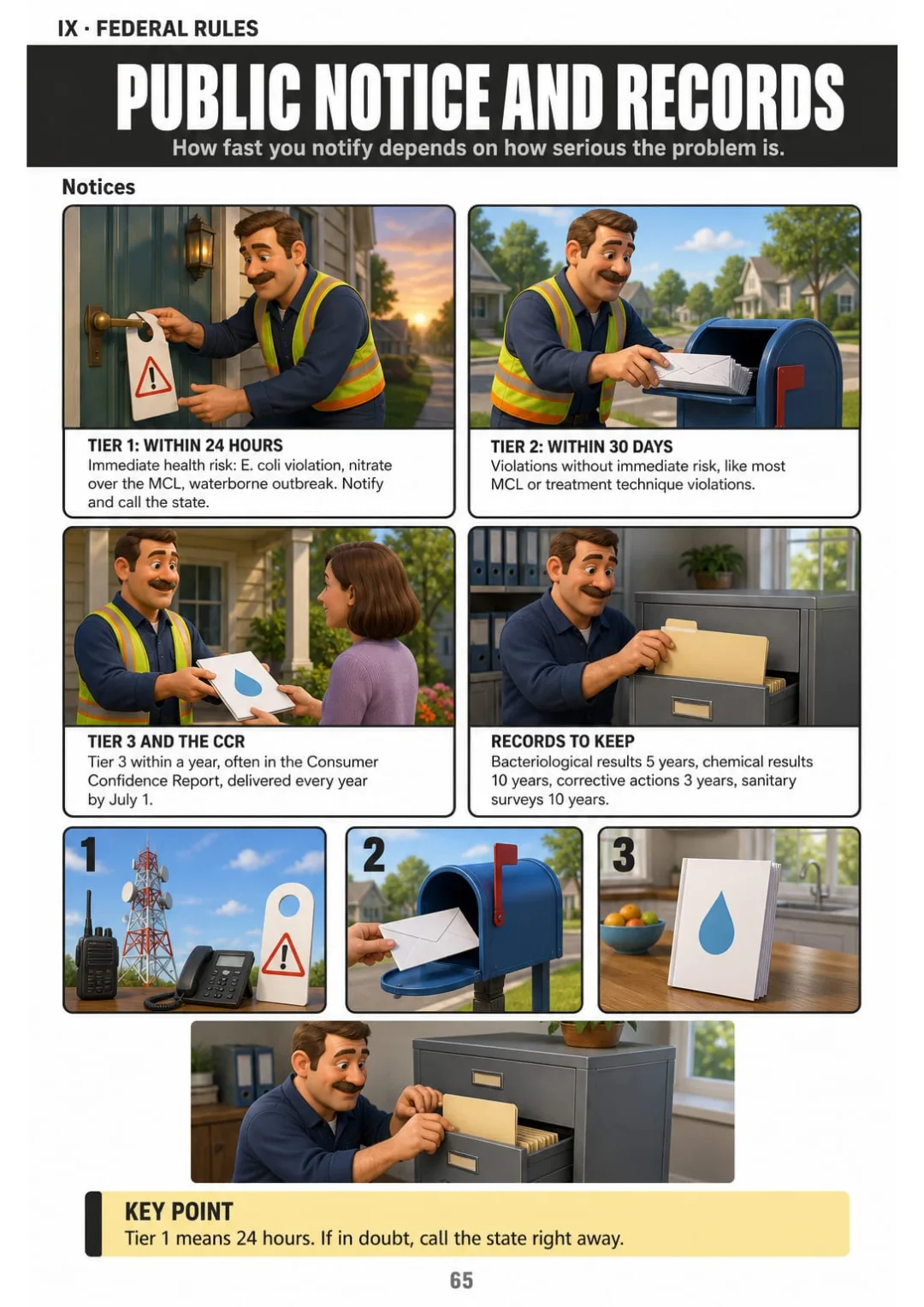
Federal rules and exam review: the Safe Drinking Water Act, lead and copper, public notice, the formula sheet drawn, and your exam day checklist.

Check yourself area by area with original practice questions, each answer explained on the same drawing you studied.

See side by side the concepts that most often get confused, and review the whole plant in short cards the week before your exam.
📄 Digital book in PDF: it comes by email. Nothing is shipped on paper.
PDF by email: You receive Water Treatment, Drawn on the Plant as a PDF in your inbox, along with the 2 free books. You pay once: no installments, no extra charges.
You have the manual. You've watched videos. But the math still trips you up and the concepts blur together. You want one book where every topic is drawn and every formula is solved step by step, so you can study it in order and come back to any page.
You run the equipment every day, but the exam asks about it in different terms. You want to match what you already know at work to what shows up on the test, without reading five hundred pages of textbook.
You come from maintenance, construction, or another hands-on job. You learn by seeing, not by reading paragraphs. You want to know what the whole plant looks like before you sit for the test.
📄 Digital book in PDF: it comes by email. Nothing is shipped on paper.
30-day money-back guarantee. Study it, use it at your plant, try the practice questions. If it didn't help you understand the topics or the math, tell us what didn't work and we'll refund 100%.
It's a digital PDF. You receive it by email and you can print it at home or at a print shop.
Yes. Every page is designed to be readable on a phone screen. It also looks great on a tablet or printed on paper.
The book covers topics and math based on EPA federal rules and the Need-to-Know Criteria published by WPI (formerly ABC). Many states reference those criteria for their entry-level drinking water operator exam, but each state writes or selects its own test, sets its own grade names (Grade 1, Class D, Small System, etc.) and may require stricter limits than the federal figures shown here. Check with your state drinking water certification agency to confirm what your exam covers before you sit for it.
Yes. Part II starts with units and conversions, then area, volume and flow, before any treatment formula. Every problem is solved in four labeled steps. Nothing is skipped.
No. This is an independent illustrated study guide. It does not give you a certificate, a license or continuing education credits (CEUs): your certificate comes only from passing your state's exam. It is not affiliated with or endorsed by WPI (formerly ABC), AWWA, or the EPA. The content follows publicly available federal rules and widely published operator training criteria.
No. It's a study companion. It helps you understand and review the topics, but it does not replace the hands-on training or coursework your state may require for certification.
You get the book and the two bonus books as PDF files, sent to the email address you enter at checkout.
Yes. You pay once and you keep the files. No subscription, no recurring charge.
No. We wrote every question ourselves to check one plant area at a time. None come from a state, WPI or ABC exam bank.
Your shelf already has the five-hundred-page manual.
You need to open a page, see the drawing, read the formula, and know which number goes where.
That's what this book does. Sixty-four topics, drawn on the plant, from intake to tap.
The exam has a date. The book is ready. Grab it and study the plant the way it actually looks.
US$ 27, paid once · 30-day guarantee · PDF by email
GET WATER TREATMENT, DRAWN ON THE PLANT · US$ 27📄 Digital book in PDF: it comes by email. Nothing is shipped on paper.